NewsTracker Answers for week of Nov. 16, 2009

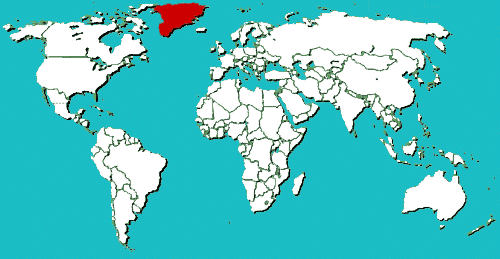
Q: The Greenland ice sheet is losing its mass faster than in previous years and making an increasing contribution to sea level rise, a study has confirmed. Where is Greenland?

Circle the area on this map


Q: Scientists used weather data, satellite readings and models of ice sheet behavior to analyze the loss of 273 billion tons of ice a year. How much would the world's sea level rise if all of Greenland's ice melted?

A. 5 feet

B. 10 feet

C. 20 feet

D. 40 feet


C. Melting the entire ice sheet would raise sea levels globally by about 7 meters, flooding coastal areas and many of the world's major cities.


Q: Greenland is the world's largest island that is not a continent. According to physical geography, Greenland is part of which continent?

A. Antarctica

B. Asia

C. Europe

D. North America


D. Physical geography is one of two major branches of geography. It deals with the study of processes and patterns in the natural environment, such as glaciers. The other main branch is human geography - the study of human impact on the world in areas such as politics, culture and economics.


Q: Greenland's 57,600 people elect a parliament with a prime minister to handle internal affairs. Which nation controls Greenland's foreign affairs, security, and financial policy in consultation with Greenland's parliament?

A. Canada

B. Denmark

C. England

D. United States


B. Vikings reached the island in the 10th century from Iceland. Danish colonization began in the 18th century, and Greenland was made an integral part of Denmark in 1953.


Q: Greenlandic is the official language of the island. Greenlandic is a form of which language?

A. Inuit

B. Danish

C. English

D. Old Norse


A. Greenlandic is an Eskimo-Aleut language closely related to the Inuit languages in Canada. Inuit and mixed Danish-Inuit make up 88 percent of Greenland's population. The Vikings' Old Norse is closely related to Danish and English which also are widely spoken on the island.