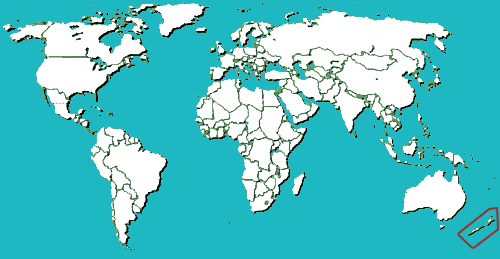
Circle the area on this map

A. A 6.3-magnitude earthquake, which leveled thousands of buildings in the city, badly damaged Christchurch cathedral, which was built in the late 19th century. New Zealand lies on the "Pacific Ring of Fire" where large numbers of earthquakes and volcanic eruptions occur.
C. Anglican and Episcopal churches are derived from the Church of England. This form of Christianity was spread around the world with the expansion of the British Empire. The British claimed sovereignty over the islands in 1840.
A. A Dutch trader was the first European to sight the island in 1642. In 1645, Dutch map makers named the land Nova Zeelandia after the Dutch province of Zeeland. British explorer James Cook later anglicized the name to New Zealand.
D. Aotearoa, "the land of the long white cloud," is one of the last major land masses on earth to be inhabited by humans. Evidence suggests New Zealand was first settled by Eastern Polynesians between 1250 and 1300. In the Maori language, maori means "normal" or "natural." In legends, the word distinguished mortal human beings from gods.