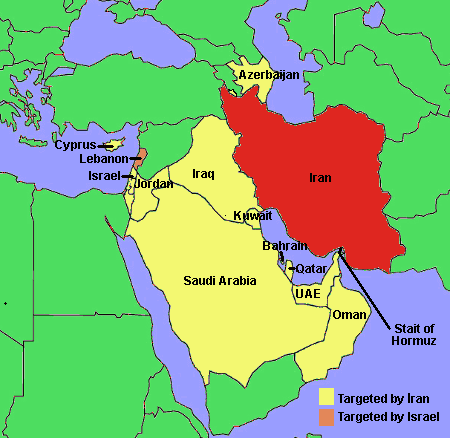
Circle the area on this map

C. Hezbollah, a Lebanese militia created and supported by Iran, fired missiles into northern Israel, which responded with full force. It heavily bombed what it said were Hezbollah targets around Lebanon and its capital, Beirut. More than 200 people have been killed, almost 800 injured, and 300,000 displaced by the bombardment in Lebanon.
A. Azerbaijan, on Iran’s northern border, does not host any U.S. forces, but it does have a defense partnership with Iran’s enemy, Israel. Like Iranians, most Azerbaijanis are Shia Muslims, and Iran has an estimated 20-25 million ethnic Azeris. In fact, Iran’s current president is an ethnic Azerbaijani.
B. About 20% of the world’s oil and liquefied natural gas is shipped through the Strait of Hormuz. The price of a barrel of American crude oil shot up 36% in the first week of the war, and it showed no signs of halting its rapid climb. The average U.S. gasoline price rose by 43 cents to $3.41 a gallon by last Saturday.
D. Franklin D. Roosevelt said in 1943 that the unconditional surrender of the Axis Powers of Germany, Italy, and Japan was the goal of the Allies in World War II. Some believed that demand may have prolonged the war. A demand for unconditional surrender generally threatens an enemy with destruction unless it gives up.