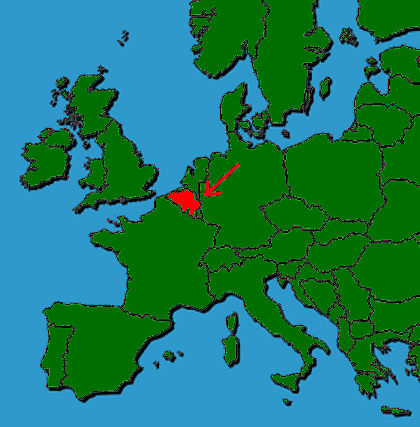
Circle the area on this map

B. Brussels is home to the European Commission and the headquarters of both the European Council and the Council of the European Union. This concentration of institutions makes the city an important center of European decision-making, explaining why “Brussels” can refer to EU authorities in news coverage. The United Kingdom and the European Union are taking steps to reverse some barriers created by Brexit, the British decision to leave the bloc following a 2016 referendum. Prime Minister Andy Burnham announced plans to reduce restrictions on food and agricultural trade, link emissions regulations, and allow limited numbers of young people to live, work, and study across borders for up to three years. Both sides also agreed to explore a deeper relationship.
C. Belgium’s coastline faces the North Sea in the northwestern part of the country. This coastal position gives Belgium access to maritime routes connecting it with Britain and other European trading partners. Economic losses associated with Brexit have strengthened support for closer ties, while Russia’s aggression, China’s industrial competition, and uncertainty about American support under President Trump have increased the strategic value of European cooperation. However, closer integration remains politically contentious.
B. The Strait of Dover separates southeastern England from northern France at the narrowest part of the English Channel. This short sea crossing helps explain the importance of cross-Channel connections for travel and trade between Britain and continental Europe.
D. These four countries share Belgium’s land borders, placing it at a crossroads in Western Europe; Belgium’s road, rail, and waterway networks connect it with surrounding markets. As talks with the E.U. continue, Britain remains far from rejoining. Further changes would face elections, negotiations, and lingering distrust. The debate highlights a central tension: how countries balance independent decision-making with the economic and security benefits of shared institutions.